Journal · Painting
Karenina Fabrizzi: The Art of Solitude and the Soft Strength of the Soul
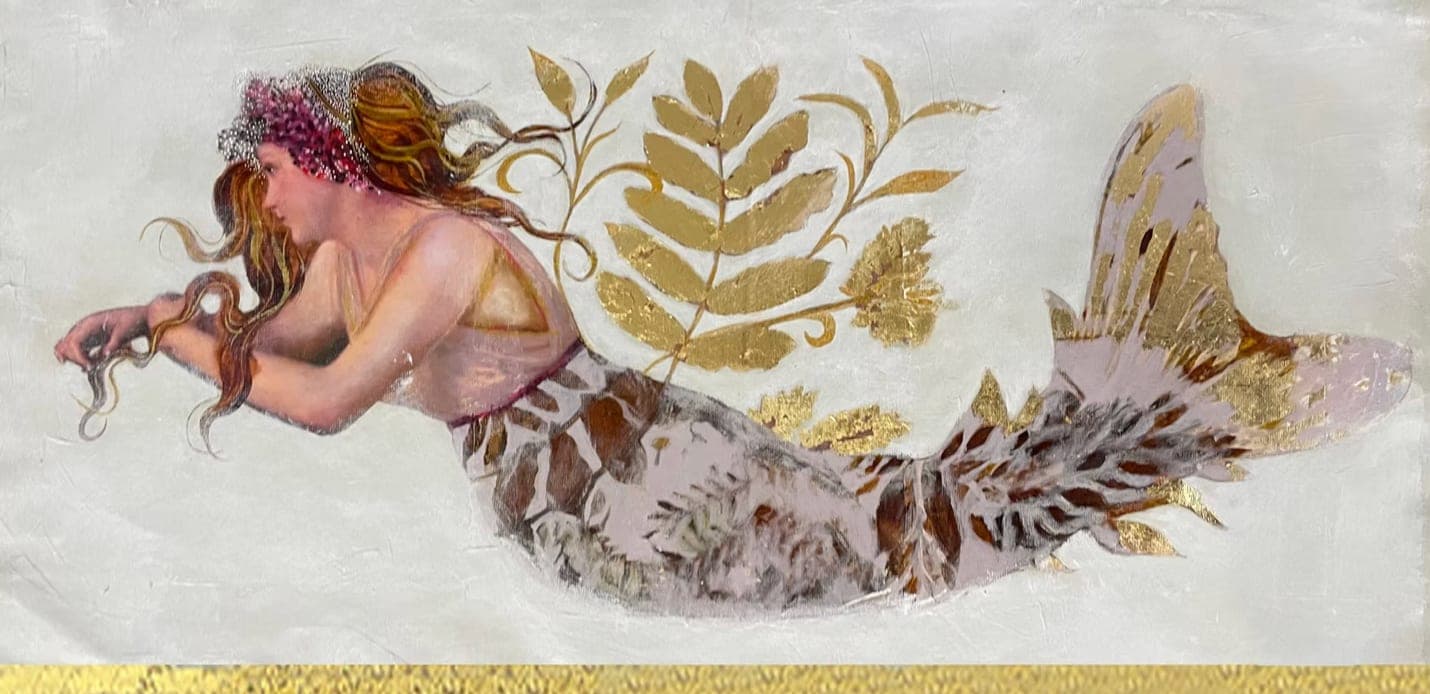
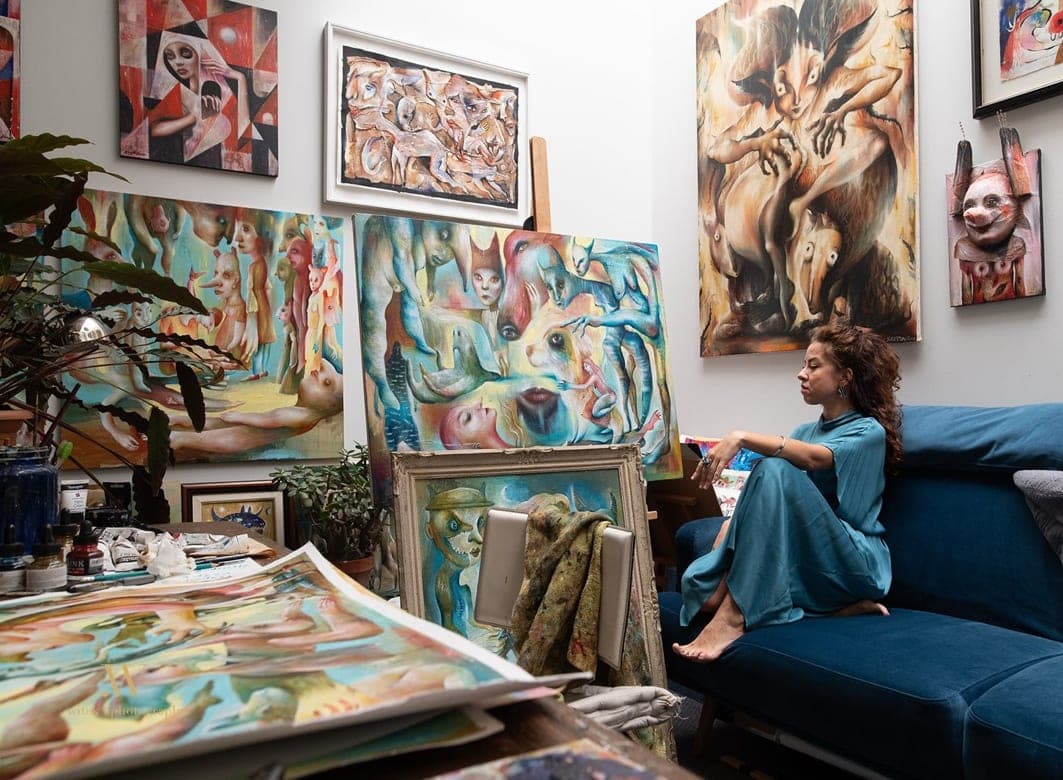
Step into the light-filled sanctuary of Karenina Fabrizzi's studio, and the rush of Barcelona immediately fades away. Described by the Italian-born painter as her "cave" and a protective "cocoon", this space is where she feels entirely in her element — like a fish in water. Her delicate, selective, and deeply poetic paintings don't shout; they whisper, inviting viewers into an intimate world of natural symbolism, gold leaf, and deep introspection. Through a continuous narrative of displacement, sanctuary, and quiet observation, Karenina has carved out a singular artistic identity that bridges continents and souls.
The Escaping Playground of a Nomadic Childhood
For Karenina, the instinct to seek refuge in a world of her own making was forged long ago in the quiet corners of her youth. As a young girl, she did not yearn to go outside and play; instead, she chose the company of her drawings, watching the world and sketching continuously. This childhood devotion was, in truth, an act of survival. Moving frequently with her mother between Italy and Argentina, she found herself constantly uprooted, struggling to adapt to new languages and find her footing in unfamiliar territories.
In the midst of this nomadic uncertainty, drawing became her sanctuary — a private playground where she could escape. It was her private space where she made her own rules and everything felt fantastic. Being an outsider forced her to develop an acute sense of observation, watching and translating the cultures around her. What began as a childhood coping mechanism ultimately transformed into her greatest artistic asset — a "superpower" of quiet, deep observation that still guides her hand today.
The Evolution of a Self-Taught Soul
Though her formal journey began with art studies in her native Italy and later at the School of Visual Arts in New York, the core of Karenina's career has been resolutely self-taught. Over time, her work has evolved alongside her own personal growth, moving past other disciplines like sculpture — which she tried during her studies but never connected with — to dedicate herself entirely to the canvas.
Her creative evolution is particularly evident in her approach to commissions. While she regularly designs for luxury books, hotel receptions, and guest suites, her deepest satisfaction comes from projects that invite her into the intimate folds of other people's lives. One such commission involved painting a portrait of young twin girls who, despite their shared genetics, possessed wildly different temperaments and behaviors. For Karenina, capturing these distinct individual souls was an extraordinary privilege, offering a rare window into the lives of others.
Subtle Symbols and the Language of the Soul
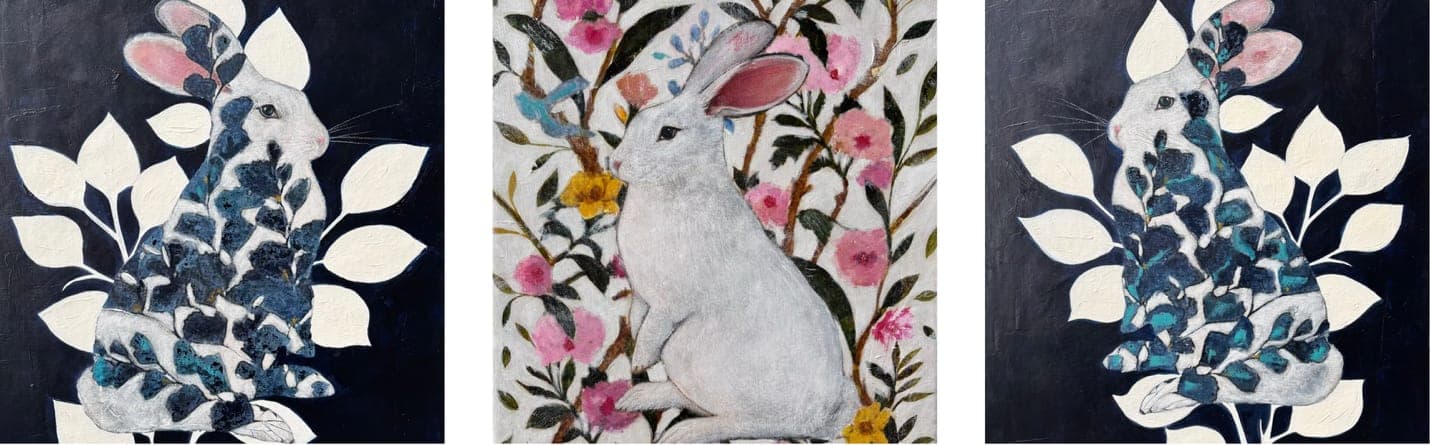
Karenina's artistic style is far from mainstream; it is a selective, rare, and deeply subtle visual language. Guided by a profound sense of mission to explore the "soul" and understand "why we're here," she uses her canvas to decode the human experience. This philosophical inquiry manifests in delicate, natural motifs where animals, humans, and botanical elements blur together.
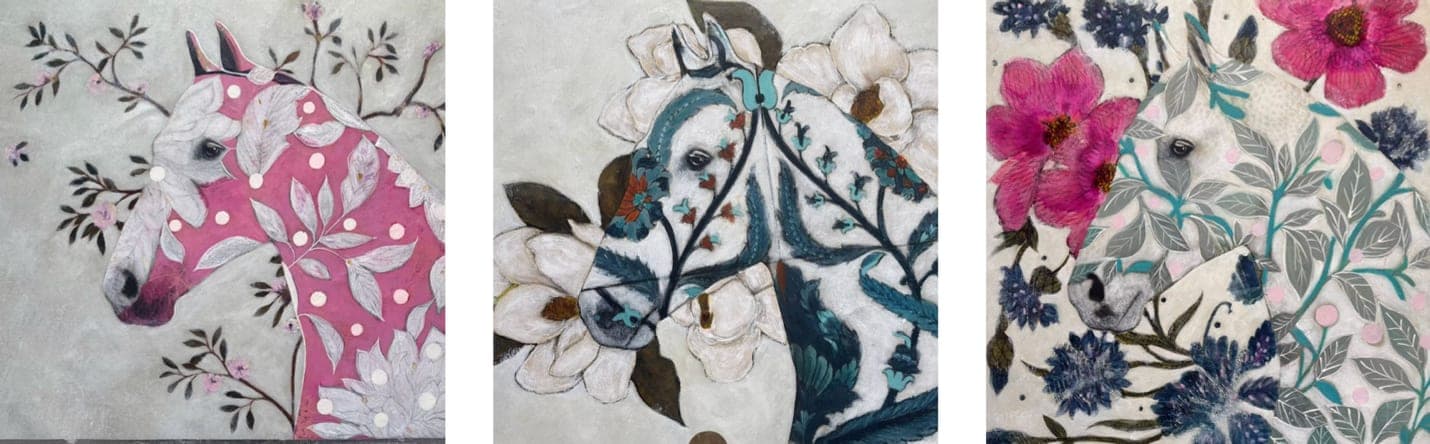
Among these, the horse holds a sacred place in her iconography. Inspired by classical Iranian equine art, she paints magnificent horses that represent freedom, power, and strength — yet she transmits these qualities with an exquisite, soft touch, pairing soft colors with hints of gold leaf that catch the light like the sun. This visual poetry is mirrored on her social media, where she weaves literary verses and poems into her public presentation, ensuring that her message remains singular, consistent, and deeply felt.
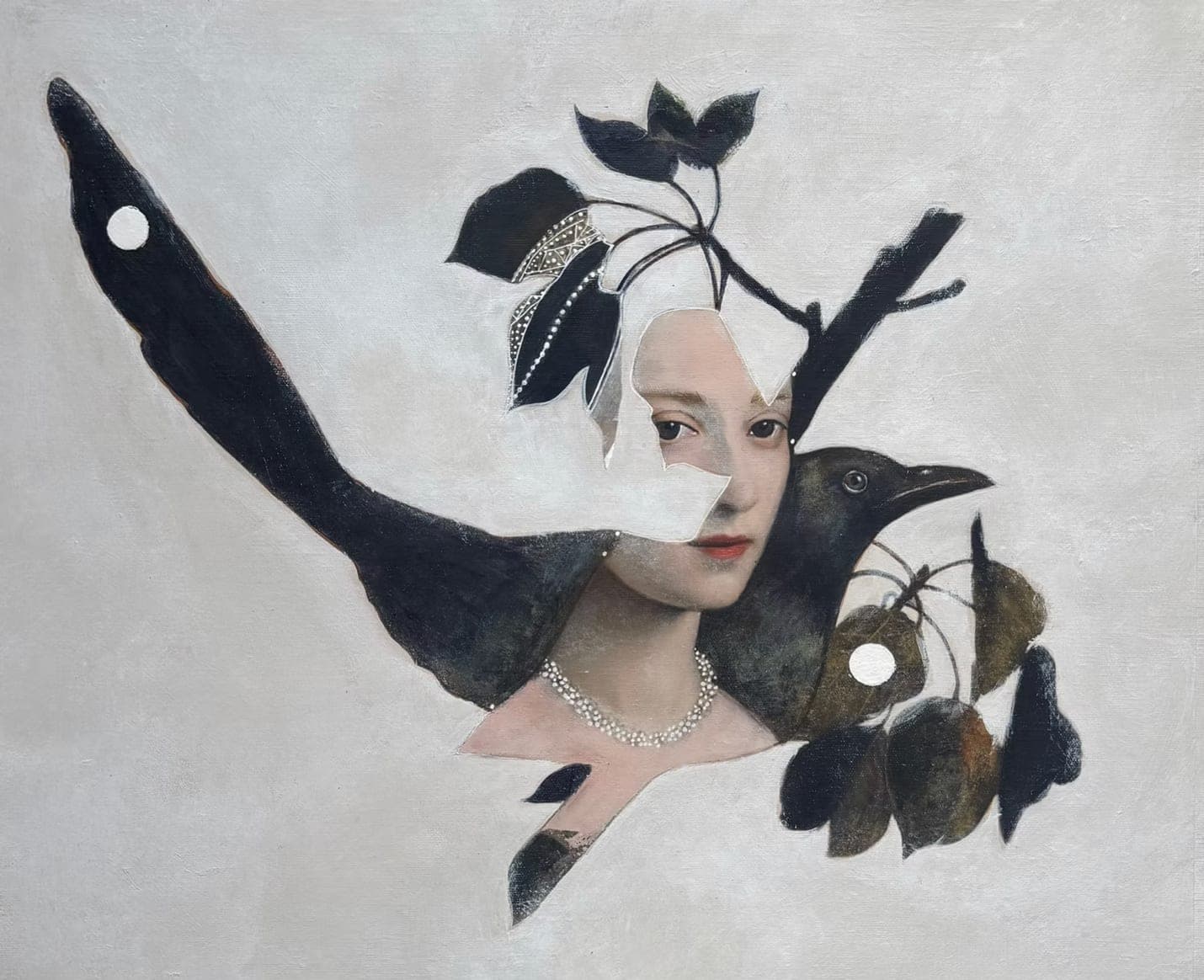
The Barcelona Paradox
Karenina's relationship with Barcelona is a study in contrasts. She arrived in the city years ago entirely by chance, fleeing a difficult period in London and Berlin after a relationship went wrong. An acquaintance offered her the keys to an empty Barcelona flat simply to water the plants. At the time, the city was a bohemian, affordable haven that gave her the financial freedom to produce art, survive on little, and solidify her professional career.
Yet today, a stark paradox remains. While she loves the city's comfortable lifestyle, the sea, the weather, and the food, Barcelona's local art market remains deeply conservative and closed to new ideas. To the local art scene, she notes, an international artist will always be treated as an outsider because they are not easily cataloged. Consequently, Karenina makes almost zero sales within Spain, and her few local exhibitions have gone poorly.
Instead, her career is sustained by a thriving, highly appreciative international market. Her most dedicated collectors reside in the United States — spanning New York, New Jersey, Texas, and Milwaukee — as well as in Italy, England, Switzerland, and France. She lives in the Mediterranean sun, but her artistic heart beats globally.
The Duality of Dreams
This tension between local quietude and global ambition highlights a charming duality in Karenina's spirit. On one hand, she harbors the fierce drive of a successful contemporary artist, eager to show internationally, secure prestigious commissions, and expand her reach. On the other hand, she confesses to a simpler, quieter dream: to live a completely free, easy-going life in Hawaii, wearing flip-flops every day by the ocean, swimming, and doing absolutely nothing.
Yet, despite this longing for a barefoot escape, she knows she cannot walk away from the canvas. To do anything else for a living would be deeply depressing. Art is her home, her playground, and her language. No matter how seductive the shores of Hawaii may be, Karenina remains bound to her cave, transforming the raw material of solitude into pure, visual poetry.
Keep reading
Related Articles
“Three free open calls for artists in Barcelona — photography and visual arts grants worth over 15,000 € — with deadlines from 31 August to 30 September 2026.”
Journal · Painting
Valentina Brostean: The Alchemy of Identity, Transformation, and the Mediterranean Muse
“Serbian-born, Barcelona-based painter Valentina Brostean on trading commercial design for pure expression, her 'alchemical' blank-canvas process, and the personal mythology of strong feminine figures and humanoid guardians that fills her house-museum.”
“Barcelona painter Ernest Compta Llinàs on reinventing himself after the 2008 crisis, an expressive portrait style that arrived fully formed, and why every imaginary woman he paints is really a self-portrait.”